
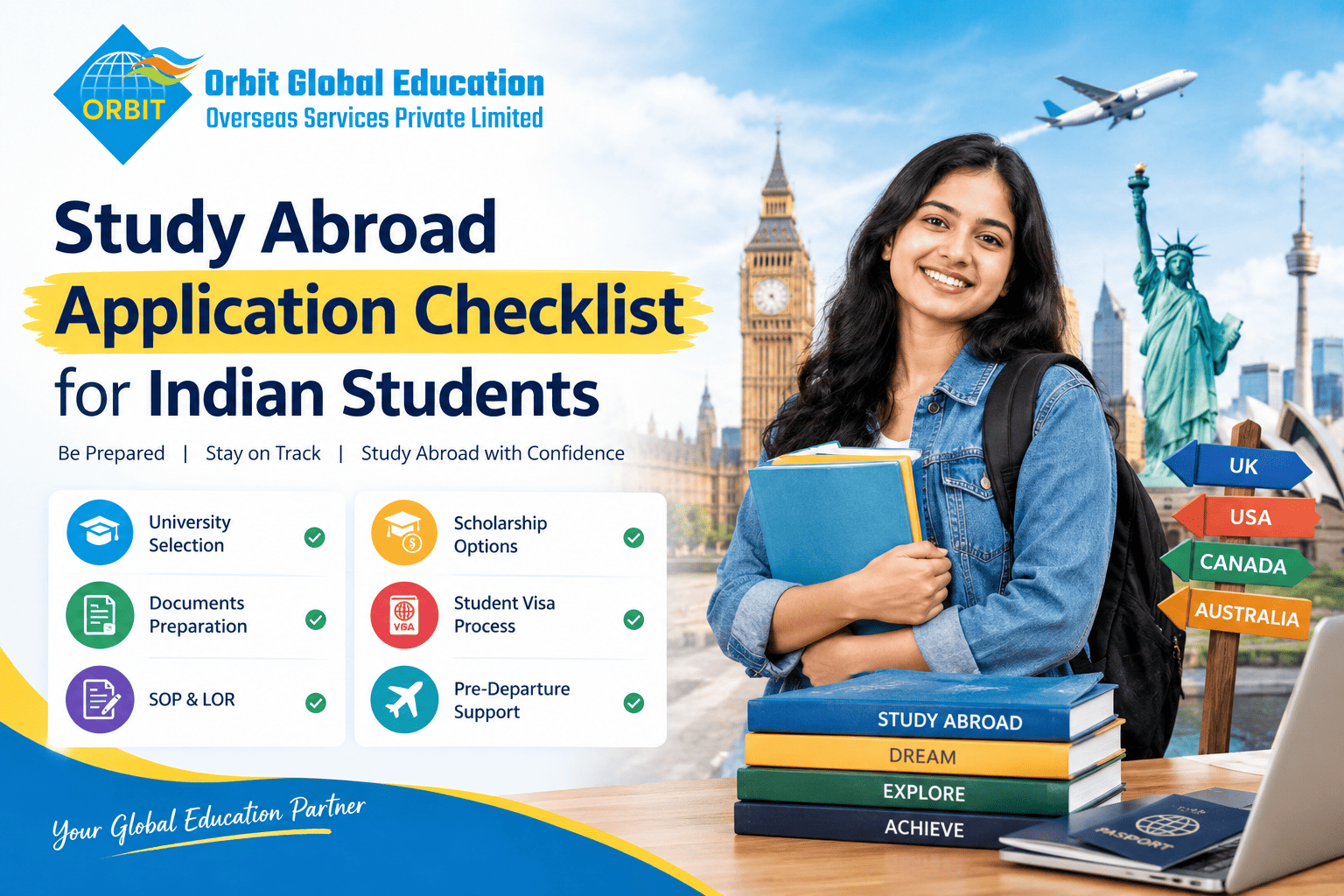
Every year, we come across students who approach us halfway through their study abroad application process, worried about missing documents, approaching deadlines, or steps completed in the wrong order. Often, this happens simply because they did not have a clear understanding of the entire process from the beginning. That is why we have prepared this checklist to help you understand each step and stay on track throughout your application.
If you’re just beginning to consider the option of studying abroad, or are already buried in your application process and need to make sure that you haven’t overlooked anything, this might be useful.
Why a Clear Checklist Matters
Applying to study abroad is not a single step but a process involving several stages. Missing even one important requirement can cause delays in your application. Understanding the study abroad process from the beginning helps you stay organised, meet deadlines, and avoid last-minute corrections.
The Complete Checklist
1. Self-Assessment and Career Goals
First and foremost, make it clear to yourself what you want in terms of course selection, the level of education (undergrad, postgrad, MBA or MBBS), and which countries you are thinking of. This one thing will save you a lot of trouble ahead.
2. Personalised Counselling
And this is where the need for quality study abroad counselling services arises. A trusted study abroad counsellor like Orbit Global Education takes the time to understand your academic background, budget, and goals, helping you explore universities and countries that genuinely align with your plans rather than simply suggesting the most convenient options.
3. Shortlisting Universities and Courses
After defining your goals, list 4 to 6 universities in 2 to 3 different countries as alternative institutions. Ensure that the universities you choose are accredited, because some courses, like medical courses, require NMC accreditation.
4. Standardised Tests (IELTS, GRE, GMAT, SAT, etc.)
Depending on your destination, university, and chosen programme, you may need to take certain entrance or language proficiency tests. Understanding the exam requirements for studying abroad in advance can help you prepare effectively and work towards the required scores.
5. Academic Documents
Gather the 10th, 12th, and (if any) undergraduate mark sheets, certificates, and transcripts. Ensure that these documents are attested well in time, as attestation can sometimes take more time than anticipated, depending on the attesting authority.
6. Statement of Purpose (SOP) and Letters of Recommendation (LOR)
Remember that your SOP should represent your own story. Approach your recommenders early on and give them the necessary context about your story so that they can write personal letters of recommendation for you.
7. Application Submission and Tracking
Complete applications correctly and check all details according to your documents. Follow up on the status of your applications and contact the universities in case of any delays.
8. Interview Preparation
Some colleges require an interview as part of the admission process, and visa applications may also involve an interview. Practising common questions about your choice of programme and college, as well as your future plans, can help you feel more confident and prepared.
9. Offer Letter and Acceptance
After receiving an offer, make sure that you check the details of the offer, including course structure and fees.
10. Scholarships and Financial Planning
This is a step that cannot be missed. Many students miss out on such benefits simply because they don’t apply on time. Researching scholarships for Indian students studying abroad can help you significantly reduce your total costs.
11. Visa Documentation and Processing
This is the point where many people have trouble. Each destination has different expectations, so it’s good to know exactly what the rules are regarding the requirements for a study visa for the USA/UK/Canada, or wherever else you plan on going, long before you plan on leaving. Make sure everything you fill out matches up.
12. Travel and Accommodation Arrangements
Make your travel arrangements well in advance instead of doing so at the last moment because this will always work against you.
13. Pre-Departure Briefing
Everything is covered, from local culture and banking systems to packing and settling into your surroundings during your first week abroad, in a good pre-departure orientation. It may be a small step that will make a big difference for you.
14. Post-Arrival Support
After landing, issues can arise related to course enrollment, buying a local SIM card, and navigating the university. It is helpful to receive constant assistance at this stage.
Common Mistakes to Avoid Along the Way
- Starting the visa process too late
- Submitting a generic SOP that doesn’t reflect your real story
- Skipping scholarship research
- Inconsistent information across documents
- Not verifying university accreditation before applying
FAQs
1. When should I start my study abroad application process?
A. Ideally, at least 10 to 12 months before your intake date, so that you will not be hurried in any of your preparations and paperwork.
2. What documents are most commonly missed by applicants?
A. Academic transcripts, financial documents, and a statement of purpose that includes all the timelines in order are the ones that students usually tend to undervalue.
3. Is a scholarship application separate from the university application?
A. Usually, yes. Scholarships have their own separate application deadlines, so it is crucial that you start searching for these even as you begin to choose your colleges.
4. Do all countries have the same visa requirements?
A. Absolutely not, because each country has its own rules and regulations in terms of money, education, and documents. Therefore, it is necessary to find out what to do regarding your chosen country.
5. Can Orbit Global Education help with the entire process from start to finish?
A. Indeed, our team provides comprehensive services including counselling, university selection, application aid, visa preparation, and advice before and after departure.
Final Thoughts
A study abroad journey consists of many components, but they are not complicated in any way individually; all they require is proper sequence and some lead time. Such a detailed checklist as presented above leaves little room for assumptions and reduces most of the stress associated with the procedure significantly.
At Orbit Global Education, we provide our students with guidance at every single point of this checklist, from the initial counselling to acclimatisation in foreign campuses. If you are looking for professional assistance and would prefer to concentrate on preparing for your study abroad journey, please contact us at Orbit Global Education.
Follow us on Instagram.