
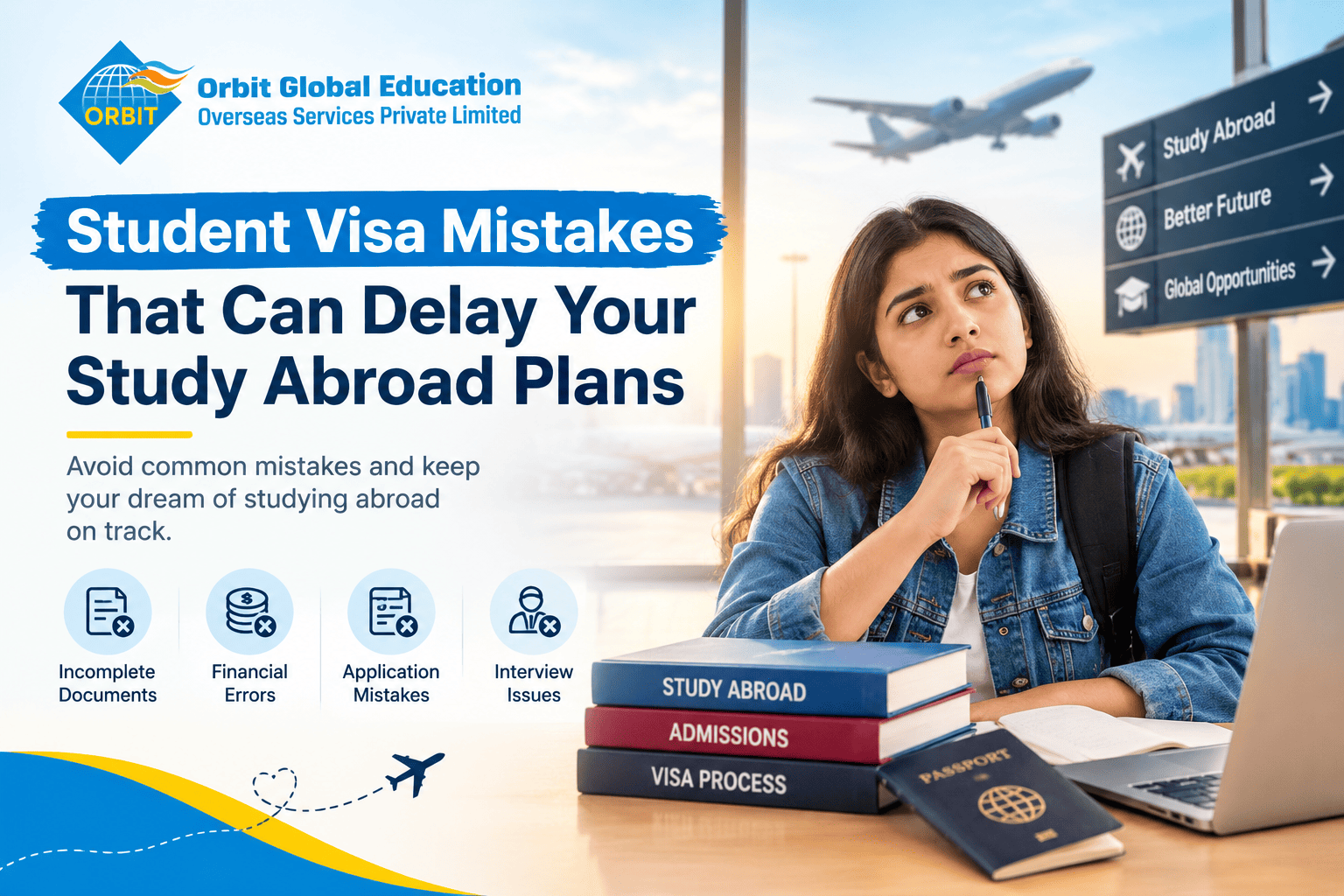
The demanding process of applying to a university abroad makes getting accepted a welcome relief. The requirements are met, budgets are made, and daydreams about the first steps on campus are made. However, your dream isn’t official until you have the visa. A surprising number of applicants, for various reasons, fail to get a visa, and it’s often due to easily avoidable mistakes. We have across the desk, over the years, had hundreds of applicants across the desk, and the mistakes that failed them are the same as those made by the numerous others that preceded them.
This post is especially helpful during the early stages of preparing a visa application. If you are preparing to send your visa documentation, take the time to review this.
Why the Visa Stage Trips Up So Many Students
You will find out that there are differences in the requirements for the study permit for the USA, the UK, and Canada, even though there may be some similarities. A checklist for the visa application in the UK may not satisfy the visa officer for Canada, and this is where students get confused. As a start, let us look at some of the common mistakes made.
1. Submitting Incomplete or Inconsistent Financial Proof
This is the #1 cause of visa delays or rejections. Embassies will not approve your visa until they verify that you have accessible funds for a minimum of 4-6 months, which are not deposited a month before the application. Large deposits made right before applying will also increase the chance of your visa being denied and have most visa officers question your application. Your bank statements and loan and sponsorship documents must be in order and explain or tell the same story.
2. A Weak or Generic SOP
Your Statement of Purpose is more than just a routine exercise; it is frequently the one document that either convinces or fails to convince a visa officer that you genuinely intend to study and then return, or that your academic objectives are clear and in keeping with the programme you have chosen. Templates that have been copied and pasted or general remarks such as “wanting a better future” usually don’t succeed. That is precisely the reason why so many students resort to professional SOP writing services for students, not to invent a story, but so as to set out their true background and aims in a well-structured and persuasive manner.
3. Missing or Poor Quality Letters of Recommendation
A last-minute letter from a busy professor can’t hurt. Processing staff and admission committees can see right through generic letters. It is worth the time and effort to obtain high-quality letters of recommendation. It is critical to provide your letter of recommendation authors with a sufficient period of time to write your letters. High-quality letters of recommendation are the result of well-prepared and contextualized prompting, not time constraints.
4. Underestimating IELTS or English Proficiency Requirements
Most students underestimate how much they need to prepare and decide that their spoken English is “good enough.” However, a lot of countries have minimum band score requirements, and a deficiency of as little as 0.5 band score can result in a denied application or a delayed application process. Methodically identifying the IELTS requirements applicable to a specific university and a specific course can help you avoid undesirable surprise delays when you are up against deadlines.
5. Applying for the Visa Too Late
The time it takes to process a visa can be different. Sometimes, it can take two weeks. Other times, it can take two months, especially if you are applying during peak periods. One mistake we have come to notice most applicants make is leaving the visa processing for overseas studies until the last minute. If you have your admission letter, then you should start the visa process immediately. Don’t wait until you purchase your plane tickets to apply.
6. Inconsistent Information Across Documents
Spelling your name the same on each of your passport and academic record pages is critical. You will run into problems if you have your name misspelled on either document. Every page you submit must be checked for spelling and correct dates. This includes bank statements and admission letters.
7. Not Preparing for the Visa Interview
There are countries that require an in-person interview, and students walk in unprepared for such interviews because they are unable to clearly explain their choice of course, university, or post-study plans. Some mock interviews can help you avoid answering vaguely and inconsistently.
8. Ignoring Country-Specific Nuances
Methods used for a US F1 visa interview often don’t translate to a UK student visa or a Canadian Study Permit application. Each country has its differences. The US looks deeply at whether you actually intend to return to your home country after studying in the US. Canada is also interested in whether you can financially support yourself during your studies. The UK is concerned with how accurately your CAS (Confirmation of Acceptance for Studies) reflects your application.
How to Avoid These Pitfalls
For a student visa consultation in Hyderabad, it is always great to have a good and experienced student visa consultant on your side. The best consultants know how to go beyond filling forms and take care of all the embassy-specific intricacies for you, so you not only get prepared for the interview but also understand why specific questions are asked.
FAQs
1. What is the main cause of a student visa being refused?
A. The most common reason is insufficient or inconsistent financial evidence; the second reason is an unconvincing statement of purpose.
2. When should I apply for the student visa?
A. As soon as your admission is confirmed, keep in mind that processing times vary from a few weeks to two months depending on the country, so it is important to start as early as possible to have a safety margin.
3. Is the IELTS mandatory for all countries that provide study abroad programs?
A. It isn’t the case in all instances; some universities and countries do provide IELTS waivers or will accept other kinds of evidence of proficiency, but a minimum band score is still required by many, so you should check the requirements of the particular university you are interested in.
4. Can a consultant help me get my visa approved?
A. Yes, a consultant with vast experience will ensure that you prepare consistent documents and prepare you well for the SOP and visa interview, saving you from unnecessary rejections.
5. What happens if there is an inconsistency in my documents?
A. Even minor inconsistencies, like a spelling mistake in your passport as compared to other documents, can result in your visa being rejected or delayed, as the embassy might suspect you of providing forged documents. It is essential to check all documents for inconsistencies and correct them before final submission.
Final Thoughts
A visa delay or denial can cost you a semester, or in some cases, even a year in your studies. Luckily, almost everything on this very list can be easily avoided with some preparation and know-how. Start early, keep everything consistent in your documents, and prepare your SOP and interview practice in a timely manner.
Orbit Global Education has helped hundreds of students with their visa applications to the US, UK, Canada, Australia, and Germany. We’ve supported them in avoiding exactly these types of avoidable mistakes. Our goal is to support you in getting it right the first time with your visa application.
Follow us on Instagram.